


On Being a Glass Toy Whore
First, let me declare for the record—I am a glass toy whore. I love them for their hardness, their smooth, frictionless sensation, and the ease of getting them to work in the exact right spot (g-spot or p-spot) that I want. Also, as a safer sex proponent, I love the fact that they clean easily and completely, and can be used with multiple partners (a real factor for those of us that are in open relationships, let me tell you). So, when I had the chance to talk to Adam Burns of Xhale Glass about his company’s green ideology, I got almost as giddy as a fifteen year old getting the latest Twilight book.
There are various ways of determining whether or not a company is green—they could focus on using greener raw materials or making more econ-friendly finished goods. They may be working towards more environmentally-friendly manufacturing and distribution, or even just improving their in-house business practices. Unfortunately, for those of you that want to support eco-friendly businesses, this makes it more difficult to separate the good from the bad—so I chose to focus on how Xhale sees itself in the marketplace, and how their practices affect the environment.
There are various ways of determining whether or not a company is green—they could focus on using greener raw materials or making more econ-friendly finished goods. They may be working towards more environmentally-friendly manufacturing and distribution, or even just improving their in-house business practices. Unfortunately, for those of you that want to support eco-friendly businesses, this makes it more difficult to separate the good from the bad—so I chose to focus on how Xhale sees itself in the marketplace, and how their practices affect the environment.
Waiting to Xhale
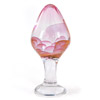
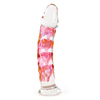
Xhale didn’t conceive of itself as a green company; they started as—and remain—a luxury toy maker, committed to making the highest quality glass toys possible, in both the materials they use and the artistry that creates them. They are proud to have handmade products produced directly by US artisans; in fact, Adam told me that “we contract out to dozen glass artisans with over ten years experience with high quality glass craftsmanship each” (and, as an aside, their toys are not hand-blown—the process is called lampworking, and involves craftspeople working glass rods over a propane-fueled flame).
Adam takes a decidedly grassroots approach to marketing. Xhale started out as a cottage industry, and has a handful of retail clients that they service as well as a small number of direct retail customers. As he says, they have “intentionally branded themselves as a luxury, unisex product”, using a simple but elegant black and white logo, so that they don't market to any one segment of the marketplace. They keep their packaging simple (and eco-friendly) as well—Xhale ships all their toys in padded storage bags, so that stores aren’t removing and discarding unnecessary plastic wrap or clamshell covers that don’t do anything to protect the product.
Adam takes a decidedly grassroots approach to marketing. Xhale started out as a cottage industry, and has a handful of retail clients that they service as well as a small number of direct retail customers. As he says, they have “intentionally branded themselves as a luxury, unisex product”, using a simple but elegant black and white logo, so that they don't market to any one segment of the marketplace. They keep their packaging simple (and eco-friendly) as well—Xhale ships all their toys in padded storage bags, so that stores aren’t removing and discarding unnecessary plastic wrap or clamshell covers that don’t do anything to protect the product.
Manufacturing the Toys of a Lifetime
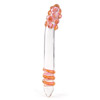
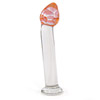
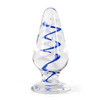
Xhale does glass, and only glass. No vibrating or multi-part toys for them—glass can develop surface abrasions or microfractures if it rubs against glass or metal, which can ruin your toy and make it hazardous to your body. They adorn their glass toys with a rainbow of colors and shapes, but they only use materials which fuse with the glass—the 24-karat gold they use in some of their toys is actually vaporized, and their other colors and UV-reactive materials actually melt into the glass, leaving them safe for the body.
Their artisans use borosilicate glass, which is very durable—the raw material has to be superior grade, and the craftsmanship has to be done by people with intensely developed skills to avoid ruining the glass by cooling it too quickly or putting too much stress on it. Their glass is imported from Germany (as well as a few select factories elsewhere in Europe), and then shipped out to their artists. This yields a product that is of the highest quality possible, and is made using all US labor.
With glass toys, you really do get what you pay for—many other companies make glass toys, but most of them do not use techniques to reduce the stress on the glass (specifically, they do not allow glass to cool down very slowly in a kiln to keep them from acquiring stress fractures; they usually put the toys on racks to cool in the surrounding air, which causes a much faster drop in temperature). There are stories of retailers that have come into their shop after a temperature change overnight to find a glass toy has shattered on display—and if they shatter during the cooler nights in a retail store, you can imagine how quickly they’ll crack in your home during play!
Another thing that I learned while talking to Adam was that Pyrex glass—the original name brand of borosilicate glass—is now made in Japan and is generally considered to be of lesser quality (see link for details). There goes the idea that a brand name essentially signifies consistent high standards!
Xhale’s main energy consumption during the manufacturing process is the small amount of electricity (for the kilns where glass is brought to room temperature) and the propane and oxygen that are used to create the flame that the glass is worked under. Propane and oxygen torches are very environmentally-friendly, especially when compared to larger furnaces or open flames that are involved in other glass manufacturing.
Their artisans use borosilicate glass, which is very durable—the raw material has to be superior grade, and the craftsmanship has to be done by people with intensely developed skills to avoid ruining the glass by cooling it too quickly or putting too much stress on it. Their glass is imported from Germany (as well as a few select factories elsewhere in Europe), and then shipped out to their artists. This yields a product that is of the highest quality possible, and is made using all US labor.
With glass toys, you really do get what you pay for—many other companies make glass toys, but most of them do not use techniques to reduce the stress on the glass (specifically, they do not allow glass to cool down very slowly in a kiln to keep them from acquiring stress fractures; they usually put the toys on racks to cool in the surrounding air, which causes a much faster drop in temperature). There are stories of retailers that have come into their shop after a temperature change overnight to find a glass toy has shattered on display—and if they shatter during the cooler nights in a retail store, you can imagine how quickly they’ll crack in your home during play!
Another thing that I learned while talking to Adam was that Pyrex glass—the original name brand of borosilicate glass—is now made in Japan and is generally considered to be of lesser quality (see link for details). There goes the idea that a brand name essentially signifies consistent high standards!
Xhale’s main energy consumption during the manufacturing process is the small amount of electricity (for the kilns where glass is brought to room temperature) and the propane and oxygen that are used to create the flame that the glass is worked under. Propane and oxygen torches are very environmentally-friendly, especially when compared to larger furnaces or open flames that are involved in other glass manufacturing.
Taking Care of Glass Toys
Adam and I discussed briefly the care of glass toys, and some properties of glass as a sex toy material. Unlike some people fear, tempered glass toys (especially those made to exacting requirements like Xhale’s artisans meet) are not as fragile as you might suspect, and if treated properly they can literally last a lifetime.
With a high quality glass toy, Adam says that “the primary care required is to prevent it from rubbing up against or bumping any other glass or metal toy”; this can cause microfractures which may chip or break the toy and make it unsafe to use. To avoid this problem, simply keep it in a fabric bag or a box by itself—which is even more appealing, given that there are a number of toy bags and cases out there that provide beautifully sexy protection.
Thoroughly cleaning glass toys is definitely easier than many other toy materials. Since glass is non-porous and temperature stable at high temps, it can be disinfected in a huge variety of ways—washing with soap and water, putting it in the dishwasher, soaking it in bleach solution or a cold sterilant, or even autoclaving. If the time comes that the toy is dropped, or breaks, it should be recycled with the glass from your home, as trying to utilize any glass that may have minute chips or cracks can be a health hazard. Fortunately, glass is universally recyclable, so appropriate disposal is easy.
With a high quality glass toy, Adam says that “the primary care required is to prevent it from rubbing up against or bumping any other glass or metal toy”; this can cause microfractures which may chip or break the toy and make it unsafe to use. To avoid this problem, simply keep it in a fabric bag or a box by itself—which is even more appealing, given that there are a number of toy bags and cases out there that provide beautifully sexy protection.
Thoroughly cleaning glass toys is definitely easier than many other toy materials. Since glass is non-porous and temperature stable at high temps, it can be disinfected in a huge variety of ways—washing with soap and water, putting it in the dishwasher, soaking it in bleach solution or a cold sterilant, or even autoclaving. If the time comes that the toy is dropped, or breaks, it should be recycled with the glass from your home, as trying to utilize any glass that may have minute chips or cracks can be a health hazard. Fortunately, glass is universally recyclable, so appropriate disposal is easy.
Thoughts on the Green Toy Movement
As Adam sees it, adult toy companies break down into two basic groups. Larger companies often approach becoming more eco-friendly by going for green certifications by changing packaging, changing toy composition, and / or highlighting (or adding) “green” items in their catalog. Smaller companies or cottage industries are generally starting from the standpoint of being green, either because that is their passion, or by happy accident (their items are low-pollution producers, or they use healthier materials because they felt that it was missing in the marketplace—hence the rise of the luxury toy cottage industry Xhale has been a part of).
Both are important; quantitatively, it's helping the industry as well as the environment. Many companies doubt that they will gain market share or goodwill because of making their processes more eco-friendly; by seeing other companies flourish after making these changes, they become more willing to invest their time, energy, and money into improving their business model. It’s important to note that Adam believes the movement towards environmentally-friendly sex toys isn’t a temporary trend—as he states, “the industry won't become less green as time goes on, because the process of educating consumers and manufacturers will create more demand for healthier products and processes.” Larger companies will be moving the discussion forward about safety and compliance. The smaller companies will continue to do what they're doing without outsourcing or substantially changing what they do, simply because that is the brand that they’ve forged.
From a societal standpoint, there has been a tremendous expansion in the body- and eco-friendly luxury toy concept. Lelo, for example, is branded and marketed in such a way that they're able to move into sales venues that sex toys have not historically been welcome in (such as lingerie stores, Walgreen’s, and other mainstream retailers) This is helping other eco-friendly, sex-positive companies (like Sliquid and Good Clean Love) find shelf space in larger, non-adult store retail establishments, and beginning to change the perception of sex toys to a "sexual health and well being" tool, which makes it easier to gains footing in the mainstream retail environment. In the end, the hope is that our sexual pleasure can be seen as something that is a basic right, rather than a moral failing, and the toys and products that we use to make that sexual pleasure happen cease to be products of shame that can only be sold behind darkened windows.
Both are important; quantitatively, it's helping the industry as well as the environment. Many companies doubt that they will gain market share or goodwill because of making their processes more eco-friendly; by seeing other companies flourish after making these changes, they become more willing to invest their time, energy, and money into improving their business model. It’s important to note that Adam believes the movement towards environmentally-friendly sex toys isn’t a temporary trend—as he states, “the industry won't become less green as time goes on, because the process of educating consumers and manufacturers will create more demand for healthier products and processes.” Larger companies will be moving the discussion forward about safety and compliance. The smaller companies will continue to do what they're doing without outsourcing or substantially changing what they do, simply because that is the brand that they’ve forged.
From a societal standpoint, there has been a tremendous expansion in the body- and eco-friendly luxury toy concept. Lelo, for example, is branded and marketed in such a way that they're able to move into sales venues that sex toys have not historically been welcome in (such as lingerie stores, Walgreen’s, and other mainstream retailers) This is helping other eco-friendly, sex-positive companies (like Sliquid and Good Clean Love) find shelf space in larger, non-adult store retail establishments, and beginning to change the perception of sex toys to a "sexual health and well being" tool, which makes it easier to gains footing in the mainstream retail environment. In the end, the hope is that our sexual pleasure can be seen as something that is a basic right, rather than a moral failing, and the toys and products that we use to make that sexual pleasure happen cease to be products of shame that can only be sold behind darkened windows.
Comments